The Legacy Crisis
 Source: encrypted-tbn0.gstatic.com
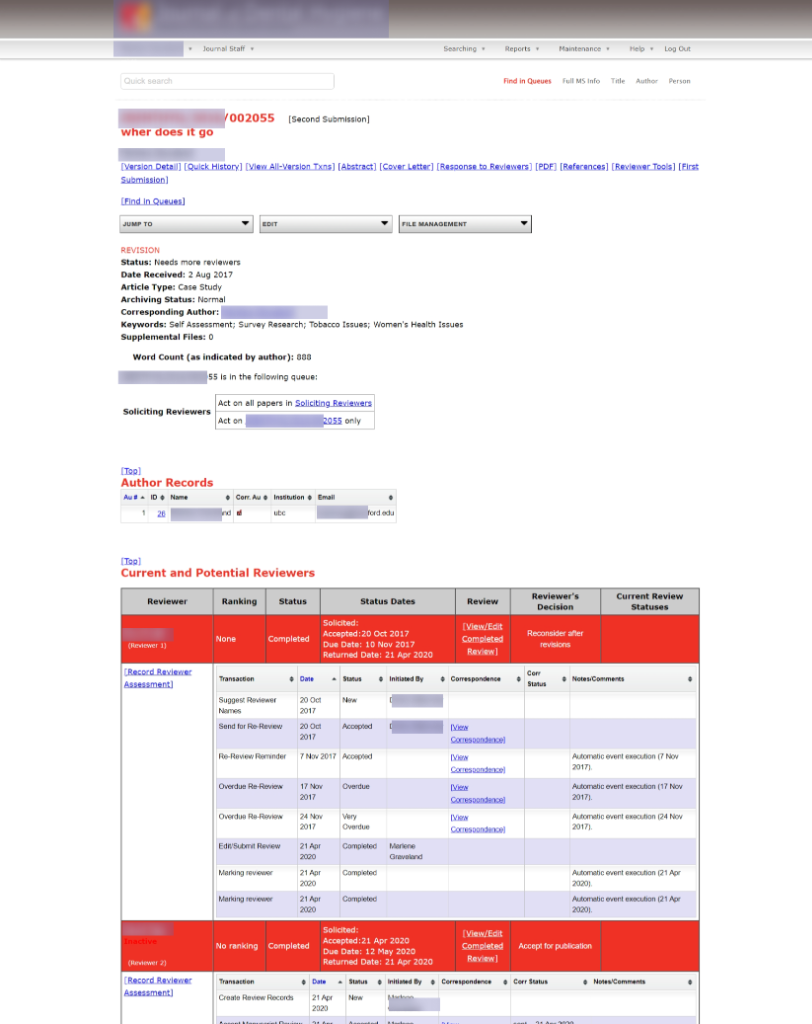
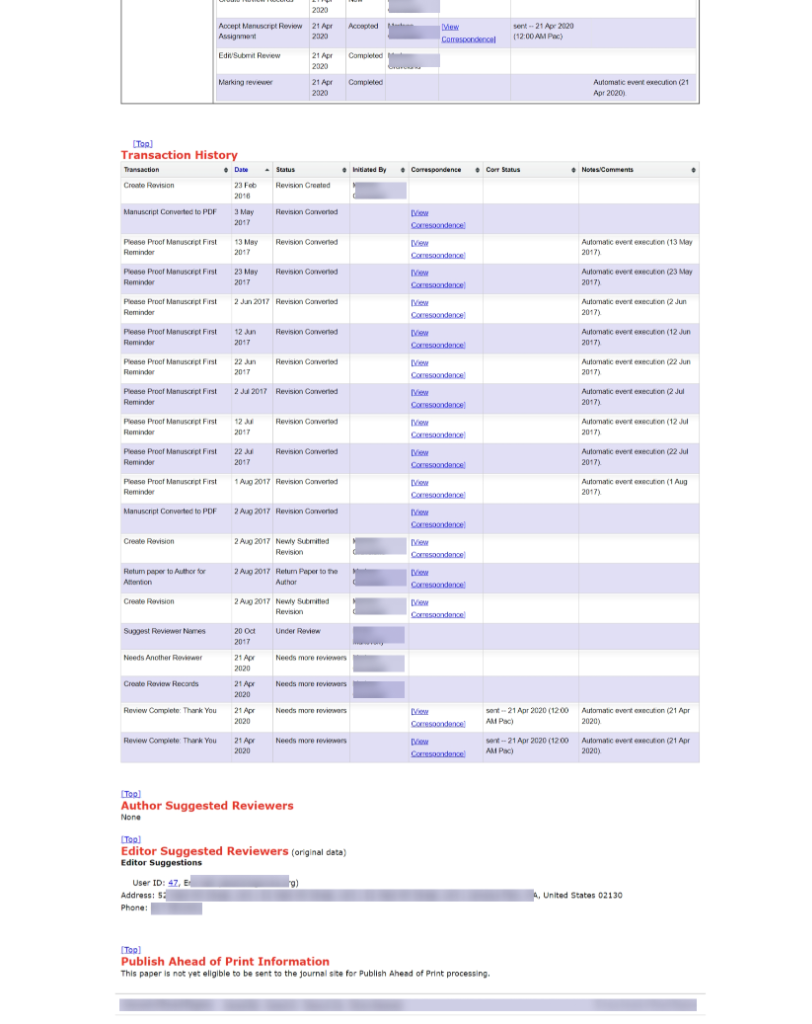
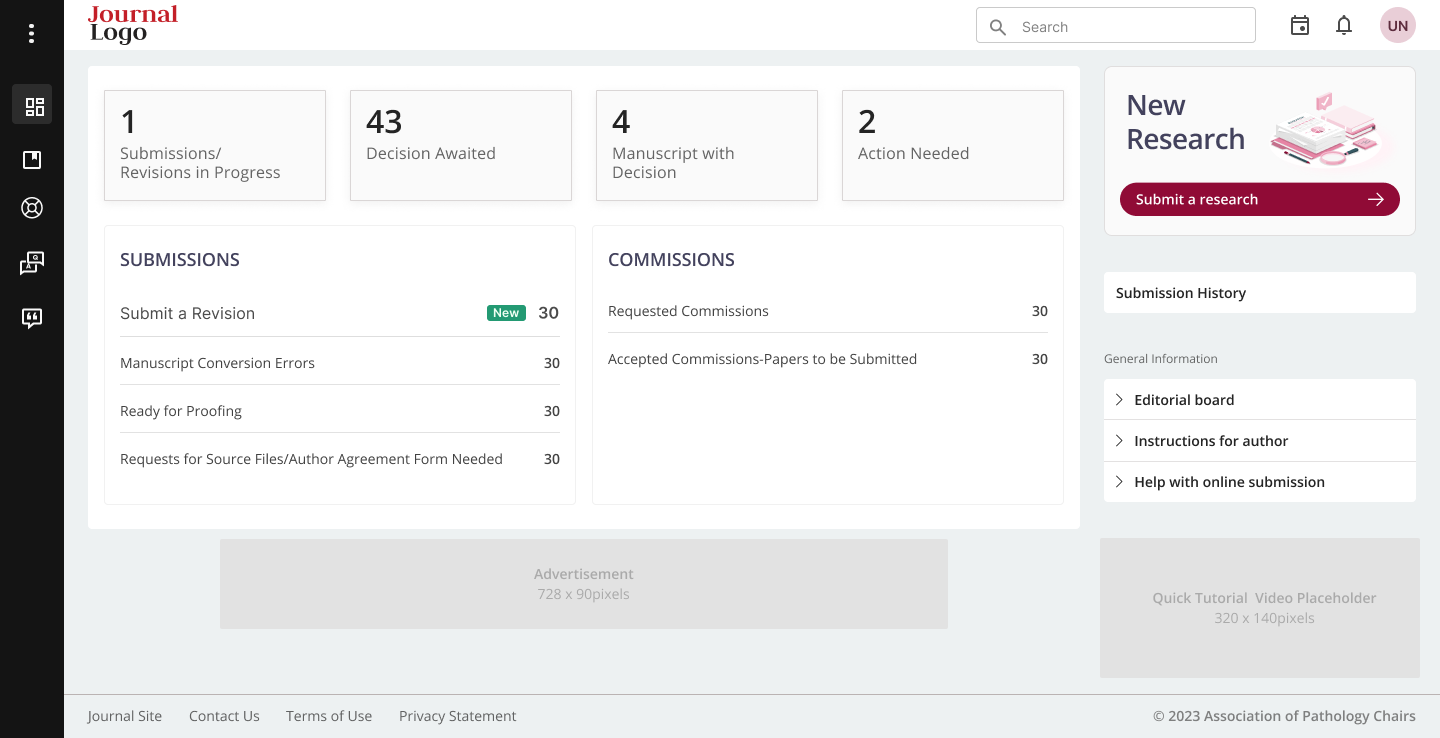
The scholarly publishing industry operates on a high-stakes verification loop. Historically, these workflows relied on software like BenchPress—a 25-year-old system defined by complex nested tables, hidden action paths, and fragmented offline communication. The resulting complexity created significant administrative friction, leaving authors bound to fill lenghty complex forms, editors overwhelmed by manual status tracking, and publishers saddled with expensive configuration workflows.
When MPS Limited initiated the development of the Submission & Peer Review System, the objective was clear: replace the rigid legacy system with a modular, highly scalable, and self-configurable SaaS application. The platform orchestrates the complete lifecycle of scholarly manuscripts—from initial submission and preflight compliance through rigorous peer review, editorial assessment, and final publication readiness.
The Scholarly Publishing Market
To design a solution, we first mapped the scale of the global scholarly publishing market. The industry processes 15 million submissions annually with a steady 3.5% annual growth rate. While 4 key competitors dominate the tooling landscape, the legacy BenchPress system maintained a 5% market share, processing critical research papers under high operational overhead.
The market is heavily concentrated, with the Top 5 Publishers controlling 61% of the total article market:
Business Goals & Objectives
Build a modular, self-configurable system that reduces the need for manual customizations.
Improve task performance efficiency for users.
Ensure seamless migration from the legacy system with minimal disruption.
Improve the user experience for editors, reviewers, and authors.
The Submission & Peer-Review Journey
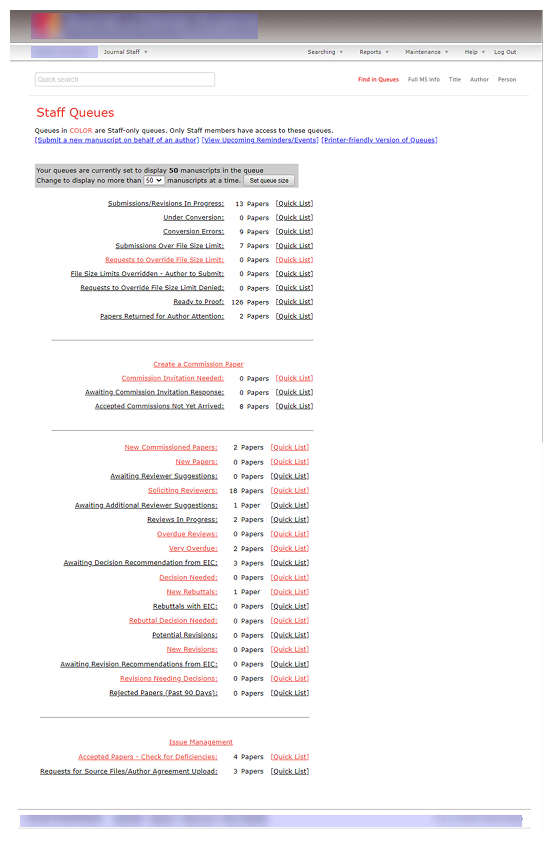
The workflow in the Submission & Peer Review System is structured around a multi-gate validation pipeline to guarantee scientific validity. The process maps across three main phases:
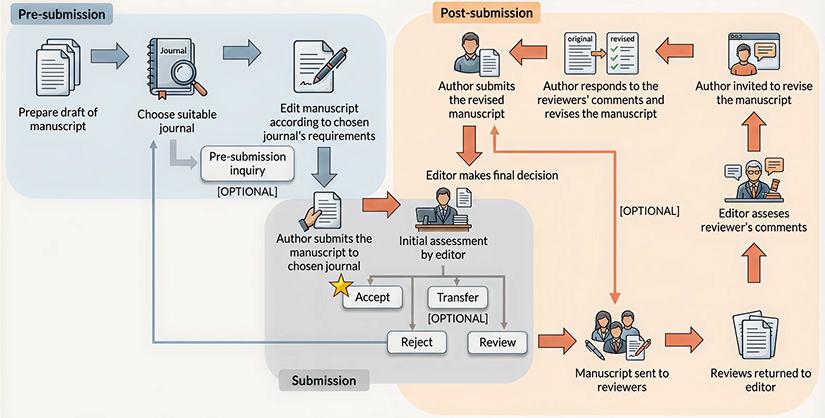
- • The Author drafts the manuscript, reviews the publisher's guidelines, chooses a target journal, and aligns the formatting with specific journal requirements.
- • An optional Pre-submission Inquiry can be sent directly to the editorial team.
- • The Author uploads the manuscript files.
- • The system runs automated metadata extraction and ingestion checks to prepare the data for initial editorial assessment.
- • Desk Review: The Editor screens the submission for quality (can reject immediately, transfer, or accept for review).
- • Peer Vetting: The Editor matches the paper with domain experts who review and return evaluation reports.
- • Revision Loop: Based on comments, the Editor requests revisions. The Author updates the file, responds to critiques, and resubmits.
- • Editorial Decision: The Editor makes a final acceptance decision, initiating production.
The People Behind the Process
To design a unified system, we formed an advisory group of 9 authors and editors from key publishers to deeply understand their current workflows, pain points, and core expectations. In parallel, we consulted with customer success and business development stakeholders to investigate and align our strategy with the most critical business and customer issues.
Based on this comprehensive analysis, we identified 3 key personas (+1 Admin) who participate in the end-to-end submission and peer-review process.
Select a segment below to view their outlined personas and details:

Key Challenges Identified In Current System
Author
- • Lack of clarity on guideline compliance.
- • Weak call-to-action (CTA) hierarchy to start submissions.
- • Workspace interface overloaded with irrelevant links.
- • Submission pipeline tracking is opaque.
- • Redundant manual metadata entry.
Reviewer
- • Manual file download-upload annotation loops.
- • Review status tracking is absent.
- • Academic conflict of interest checks are tedious.
- • Review guidelines are confusing or hard to access.
Editor
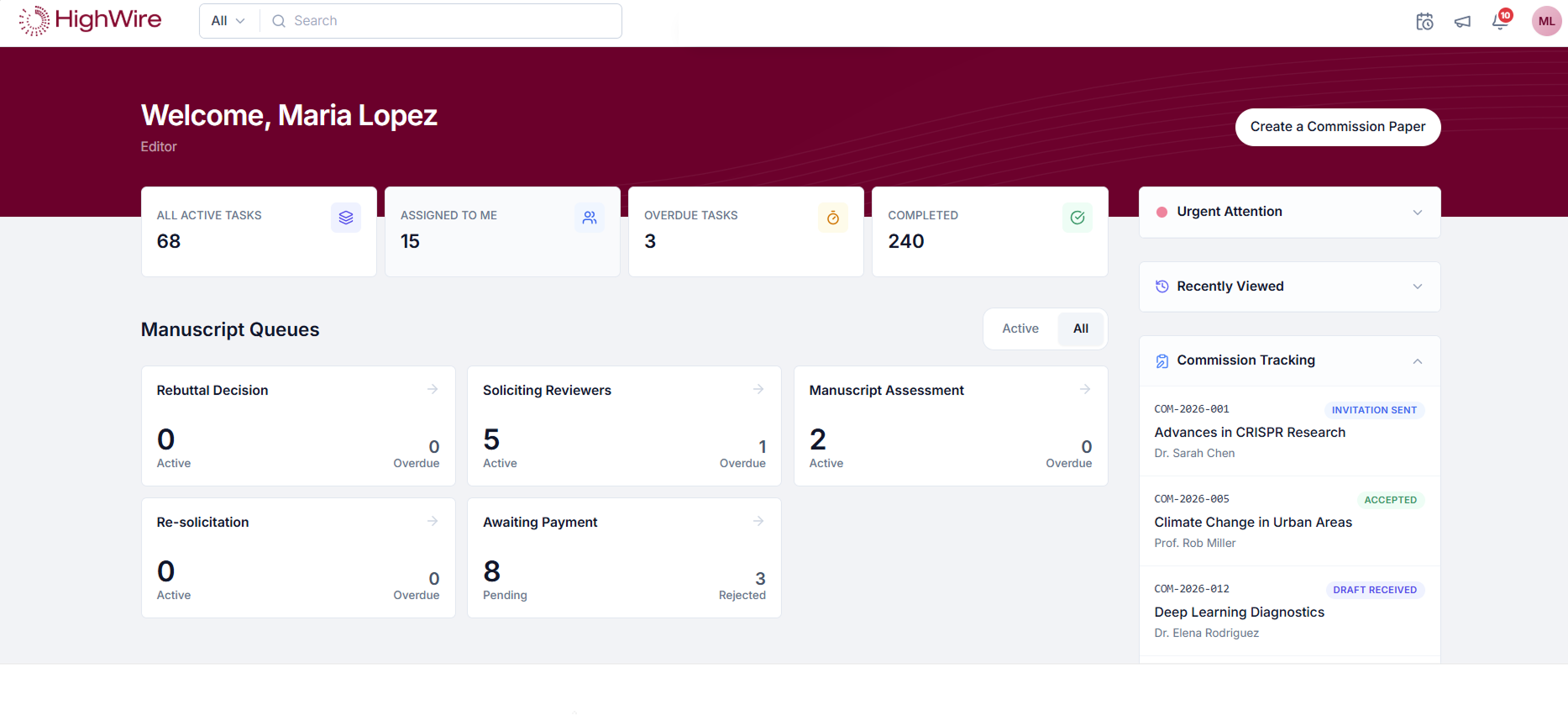
- • No system-wide operational metrics dashboard.
- • Workflow adjustments require development time.
- • Reviewer searching and qualification is manual.
- • Inactive links and empty queues clutter dashboards.
- • Discussion contexts split across external channels.
Operational Tasks Identified
General Tasks
These are tasks common to Author, Reviewer, and Editor.
- • Register and log in to the platform
- • Manage authentication and password recovery
- • Track assigned tasks through dashboard / queues
- • View announcements and notifications
- • Search manuscripts, users, or activities
- • Maintain user profile and expertise information
Roles-specific Tasks
- • Submit a manuscript
- • Ensure submission compliance (preflight checks)
- • Submit revisions based on feedback
- • Track manuscript status
- • Evaluate new manuscript submissions
- • Assign and solicit reviewers
- • Monitor active reviews
- • Make editorial decisions
- • Manage workflows, users, and permissions
- • Track journal performance through reports
- • Review assigned manuscripts
- • Submit evaluation and recommendations
- • Track pending and completed reviews
Ideation & Solution Architecture
To resolve the operational bottlenecks and address the conflicting requirements of these three user segments, we established a 6-pillar solution architecture:
Information Architecture Strategy
Many of our customers have relied on BenchPress for over a decade. Their users have established deep mental models of the system, knowing exactly where to find the tools they need. A complete overhaul of the information architecture risked disrupting these successful navigation patterns, which could lead to friction and low adoption rates.
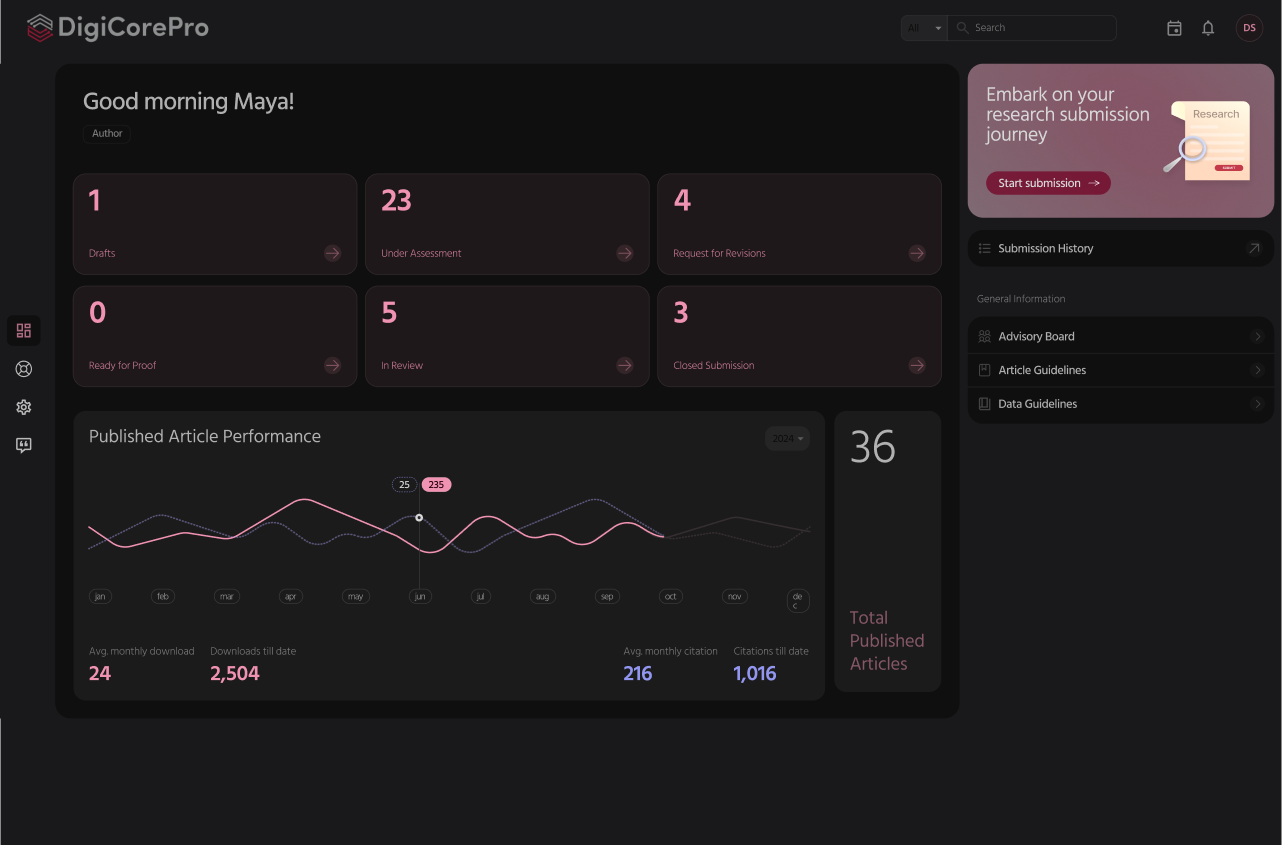
Rather than forcing a completely information structure, we chose to augment their existing habits. We selectively reorganized only the high-friction areas where users were actively struggling. This targeted restructuring boosts efficiency while preserving the familiarity users rely on. To achieve this, each role required a harmonized yet distinct information layout:
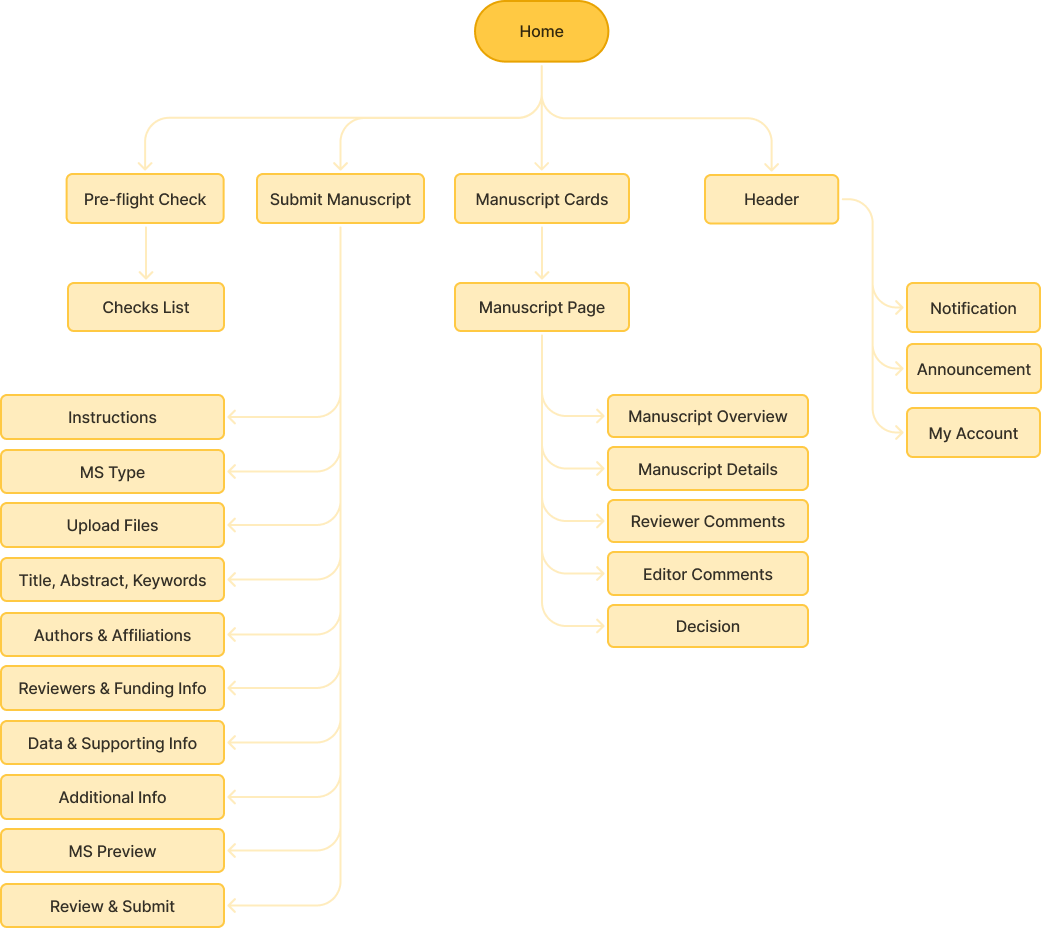
Author IA Map
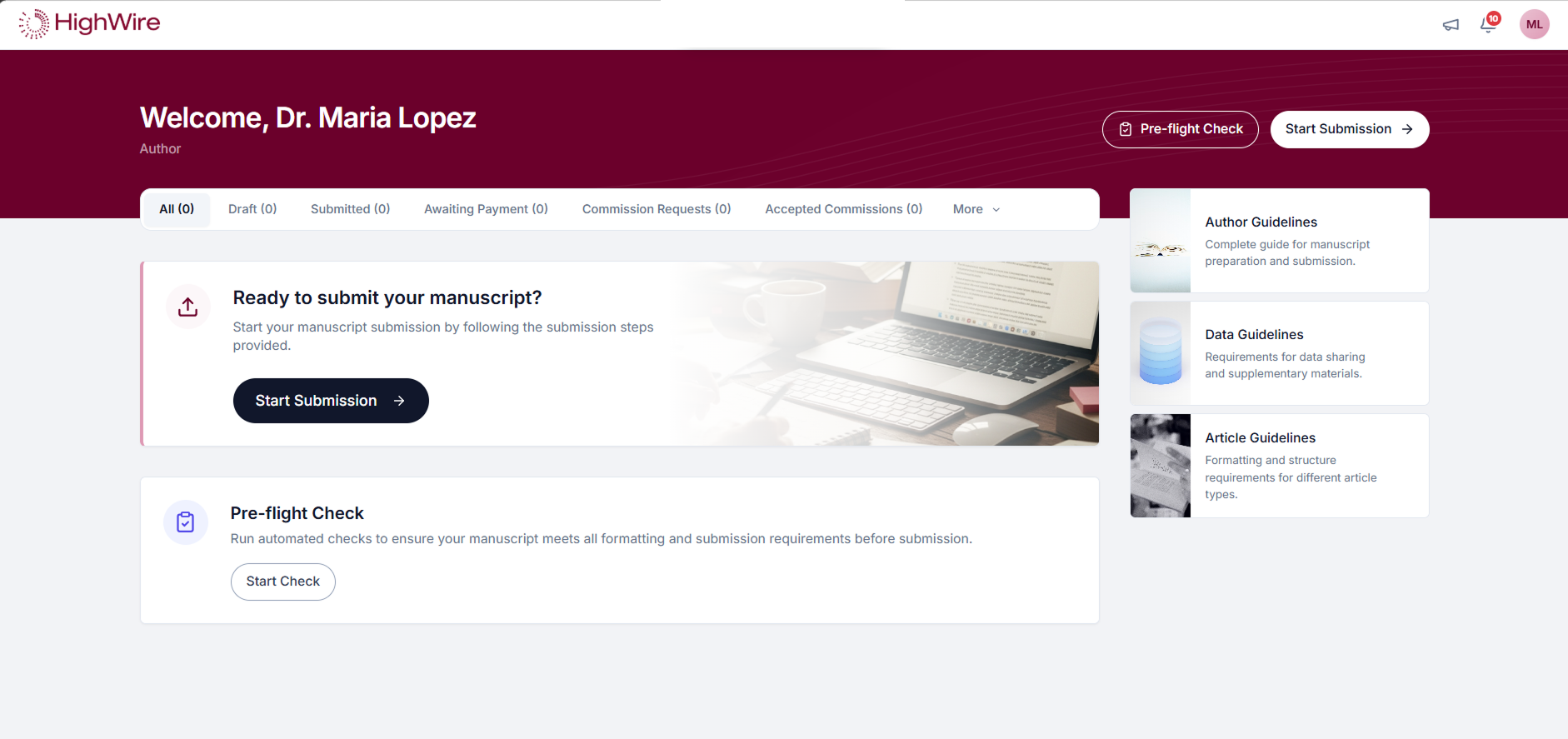
Designed for high discoverability at a surface level. Because the volume of concurrent manuscripts per author is low, the structure prioritizes direct progress checks and linear submission flows over deep data hierarchies.
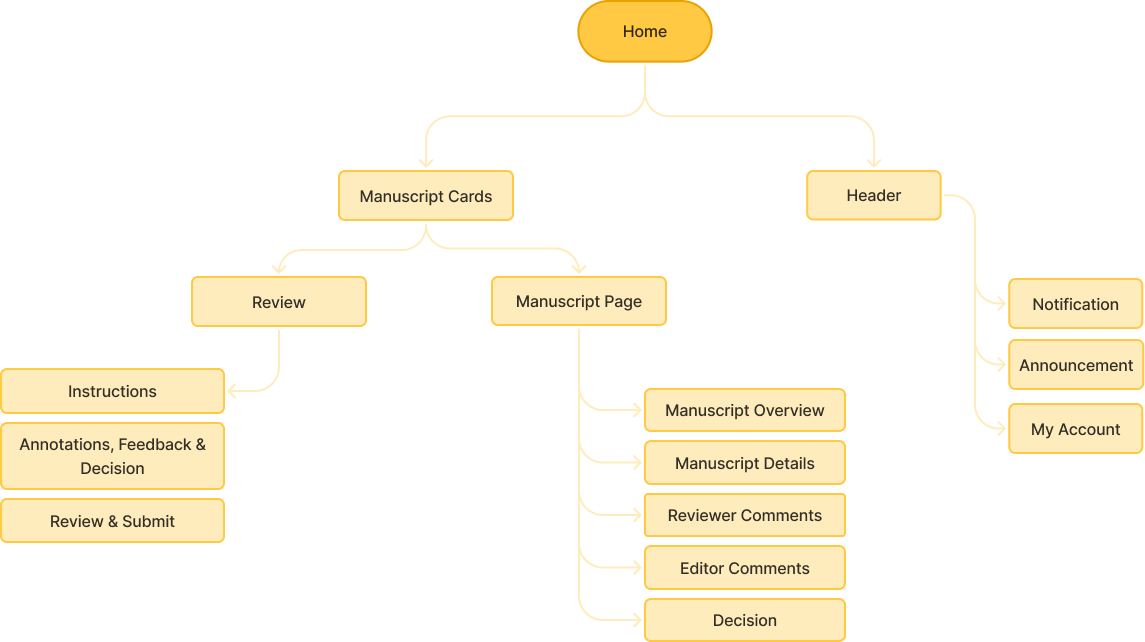
Reviewer IA Map
Also built for surface-level discoverability, but focused entirely on evaluation. It skips complex menus to give reviewers quick and easy access to their review requests.
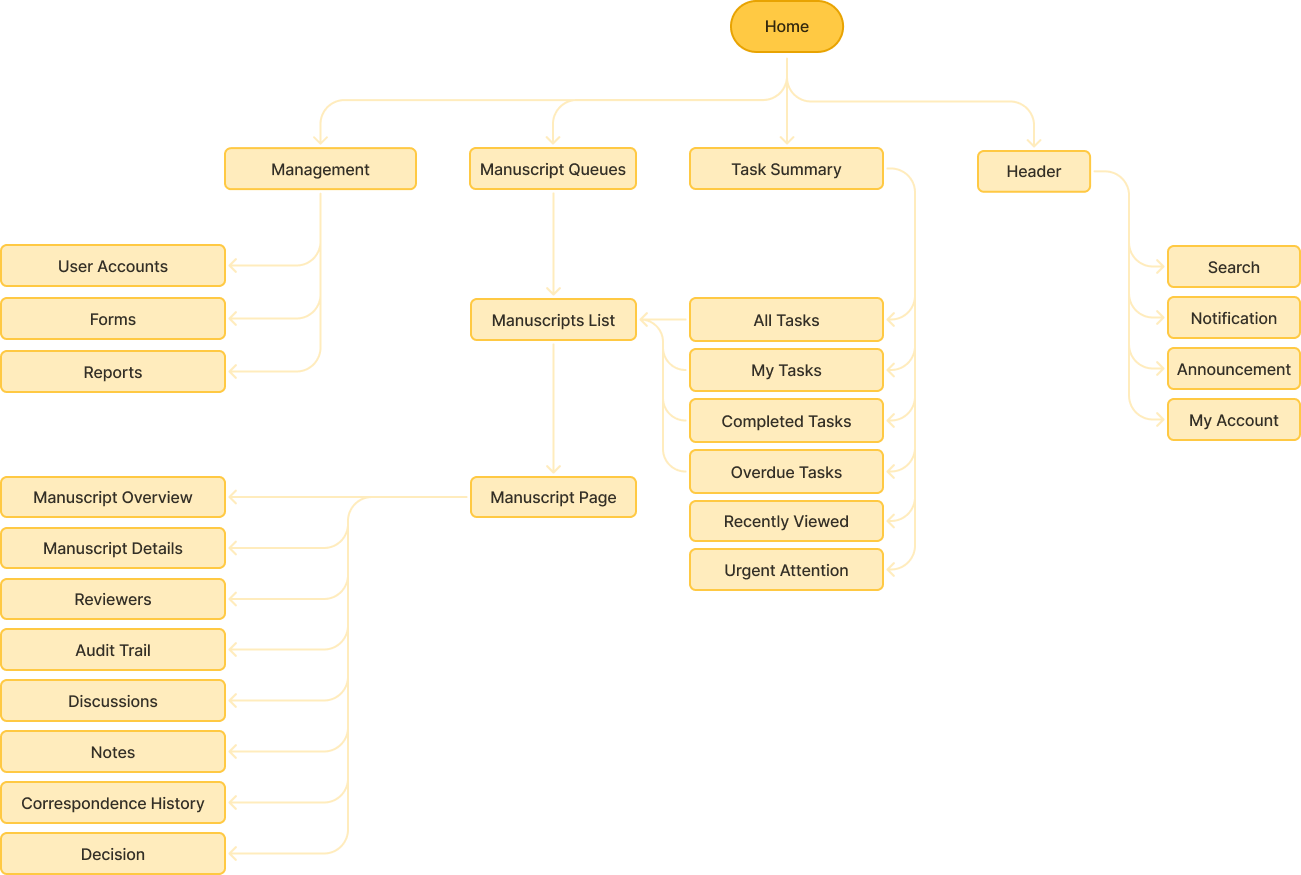
Editor IA Map
Designed in hierarchical layers to handle complex data. This layout lets editors easily browse large queues and check audit trails without jumping between screens.
Mid-fi Prototyping the Submission Flow
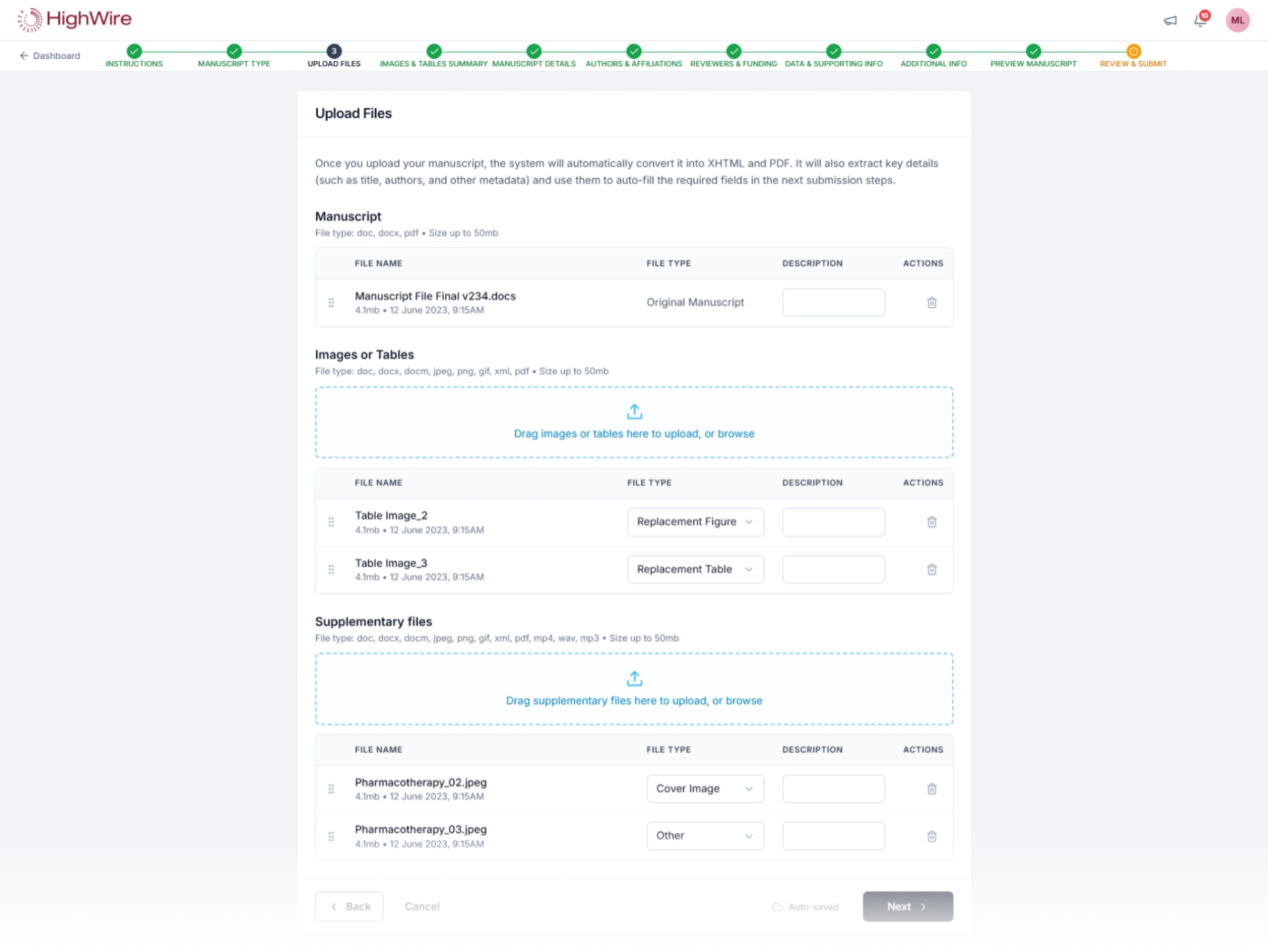
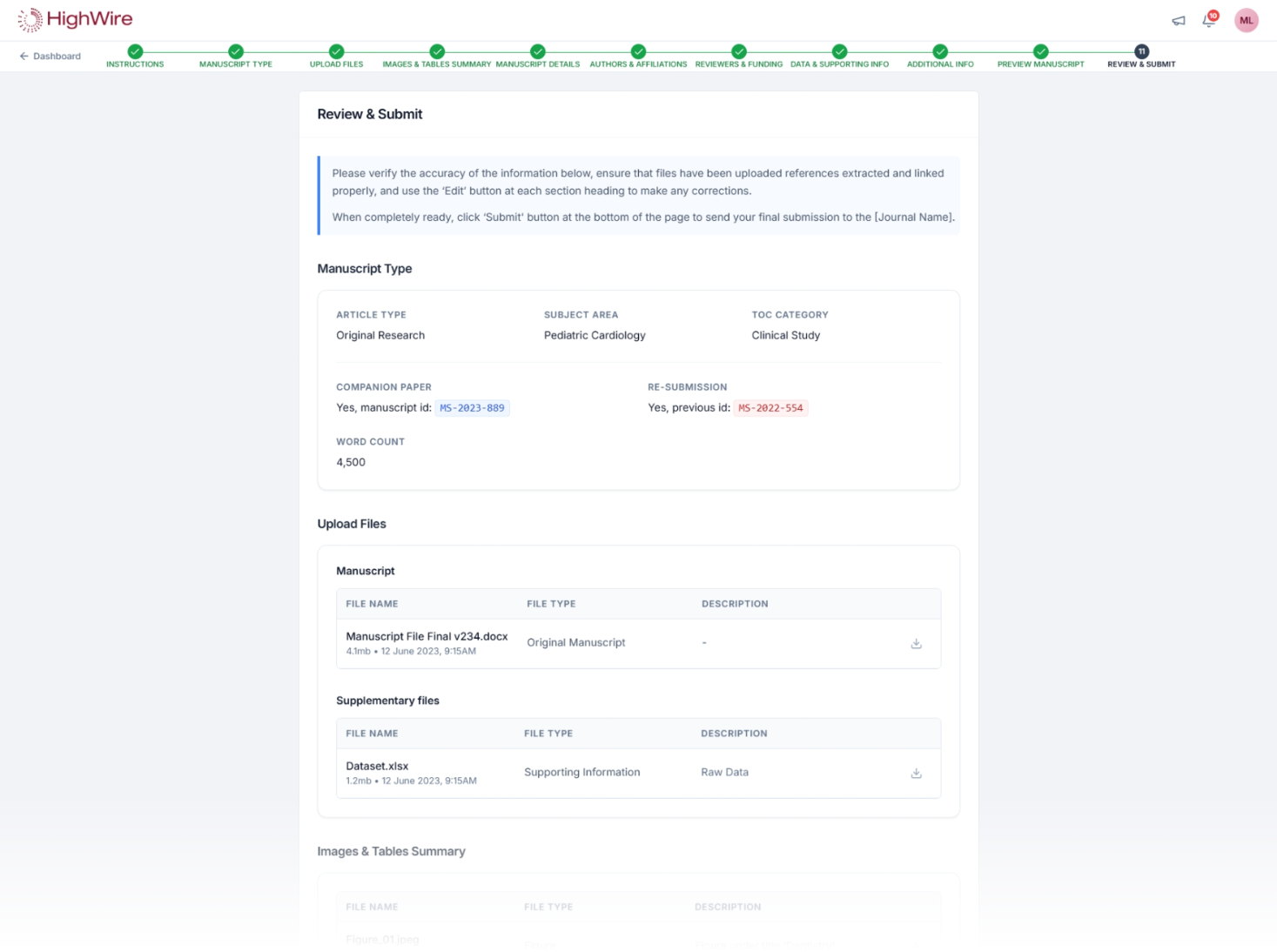
In defining the manuscript submission flow for author, we explored 6 layout variations in low-fidelity. Testing focused on two primary layouts:
Layout A: Horizontal Steps
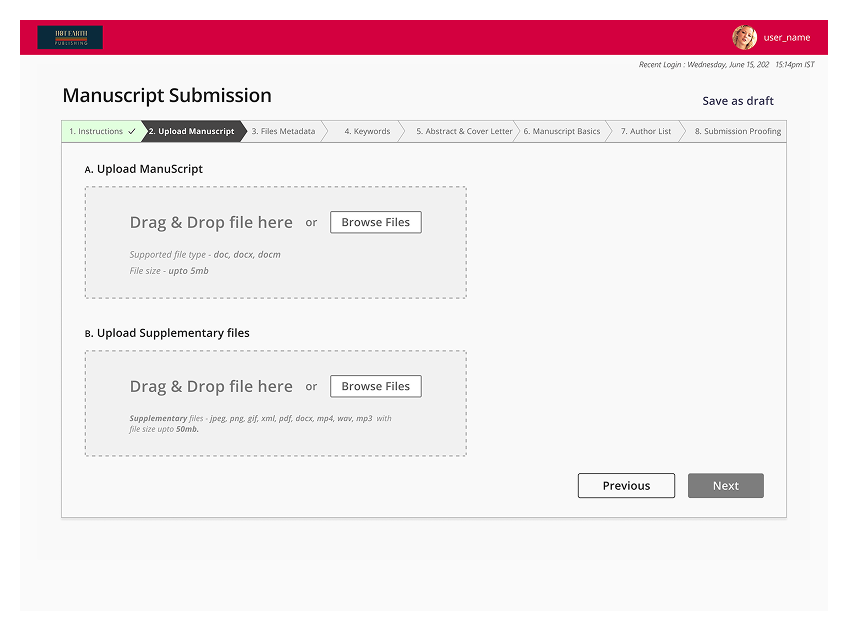
Features clear, sequential step indicators across the top. This layout clearly showcases submission milestones and progress, helping users map form length.
Layout B: Left-Vertical Navigation
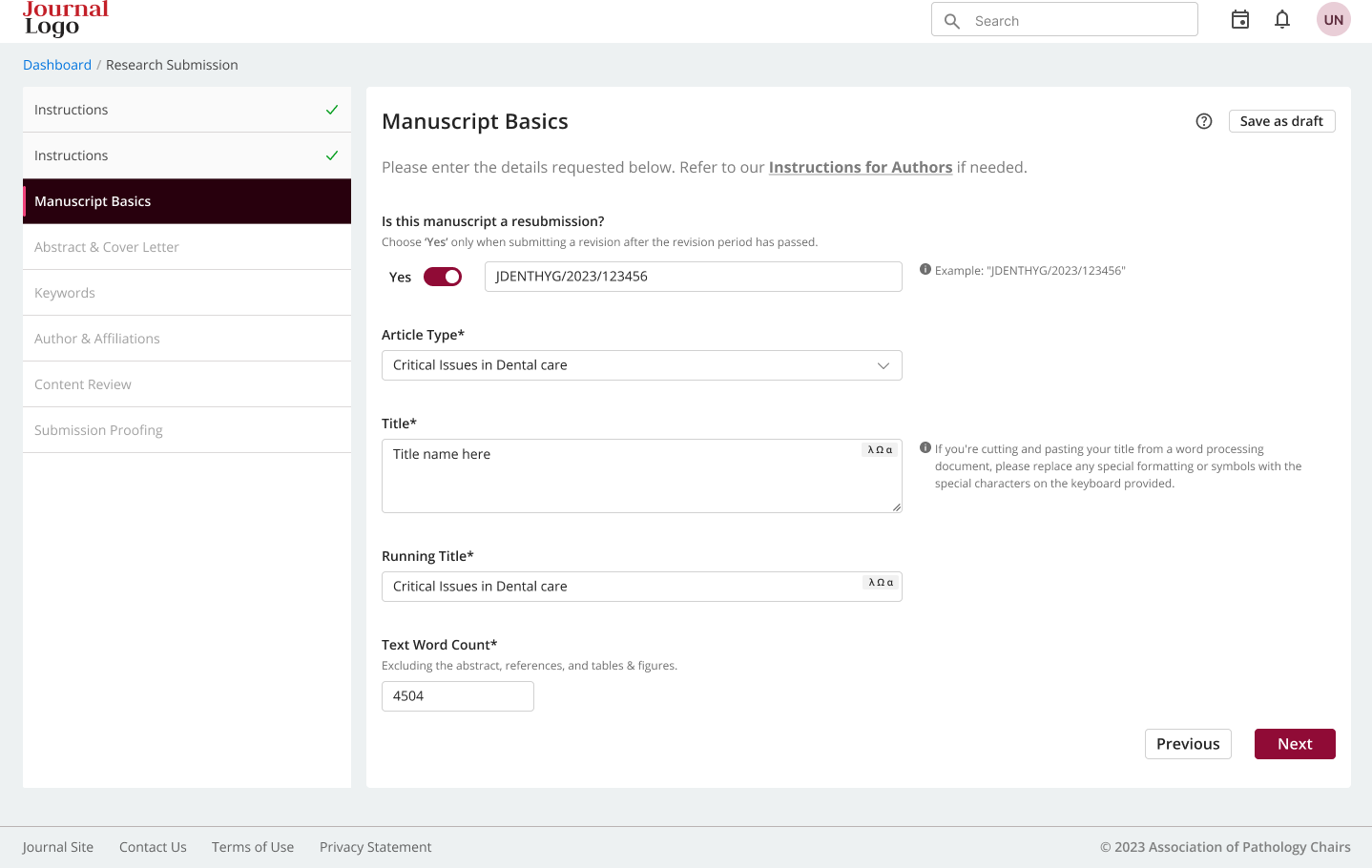
Lists stages vertically on a left sidebar, leaving the right panel open for data entry fields.
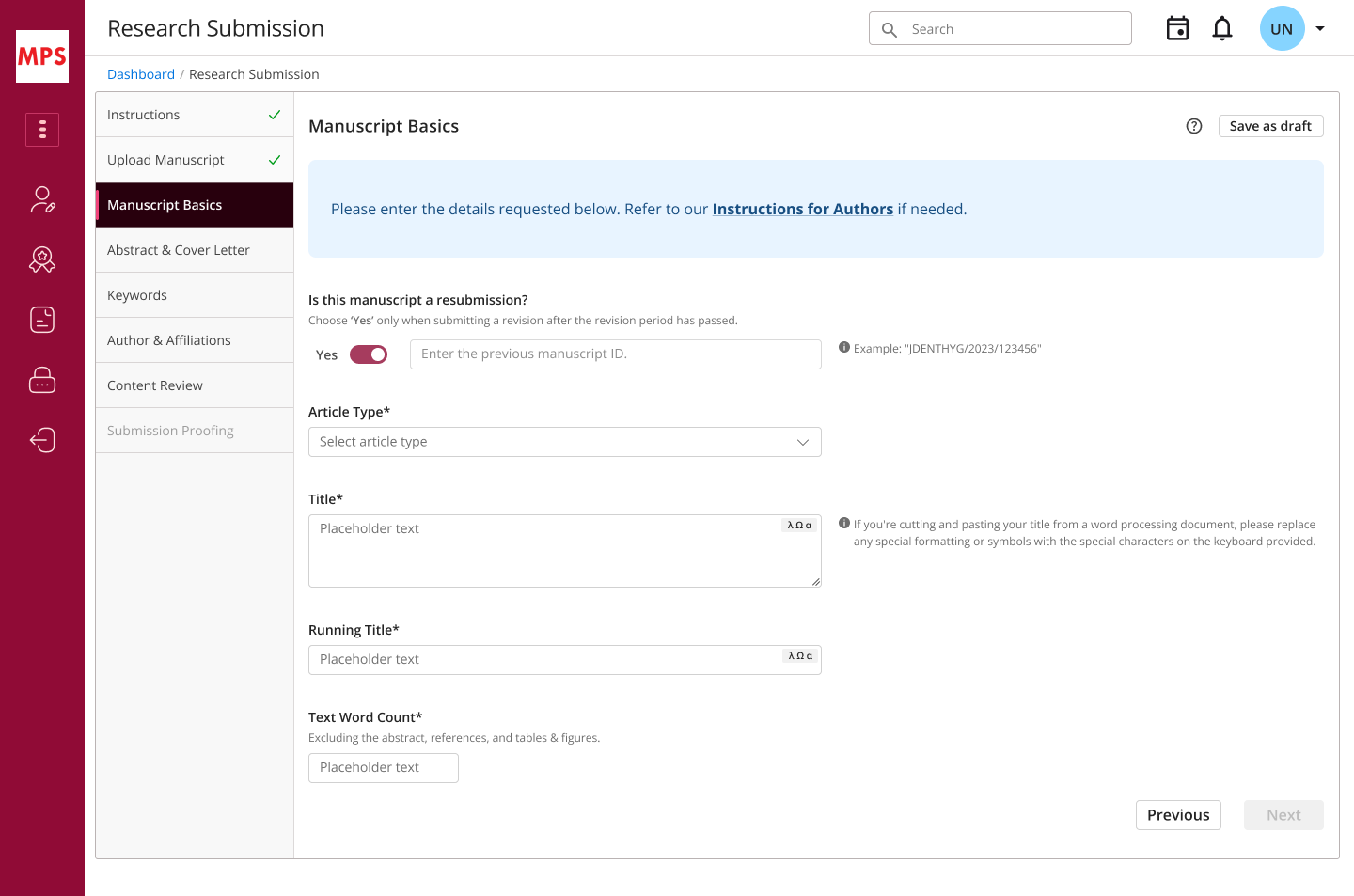
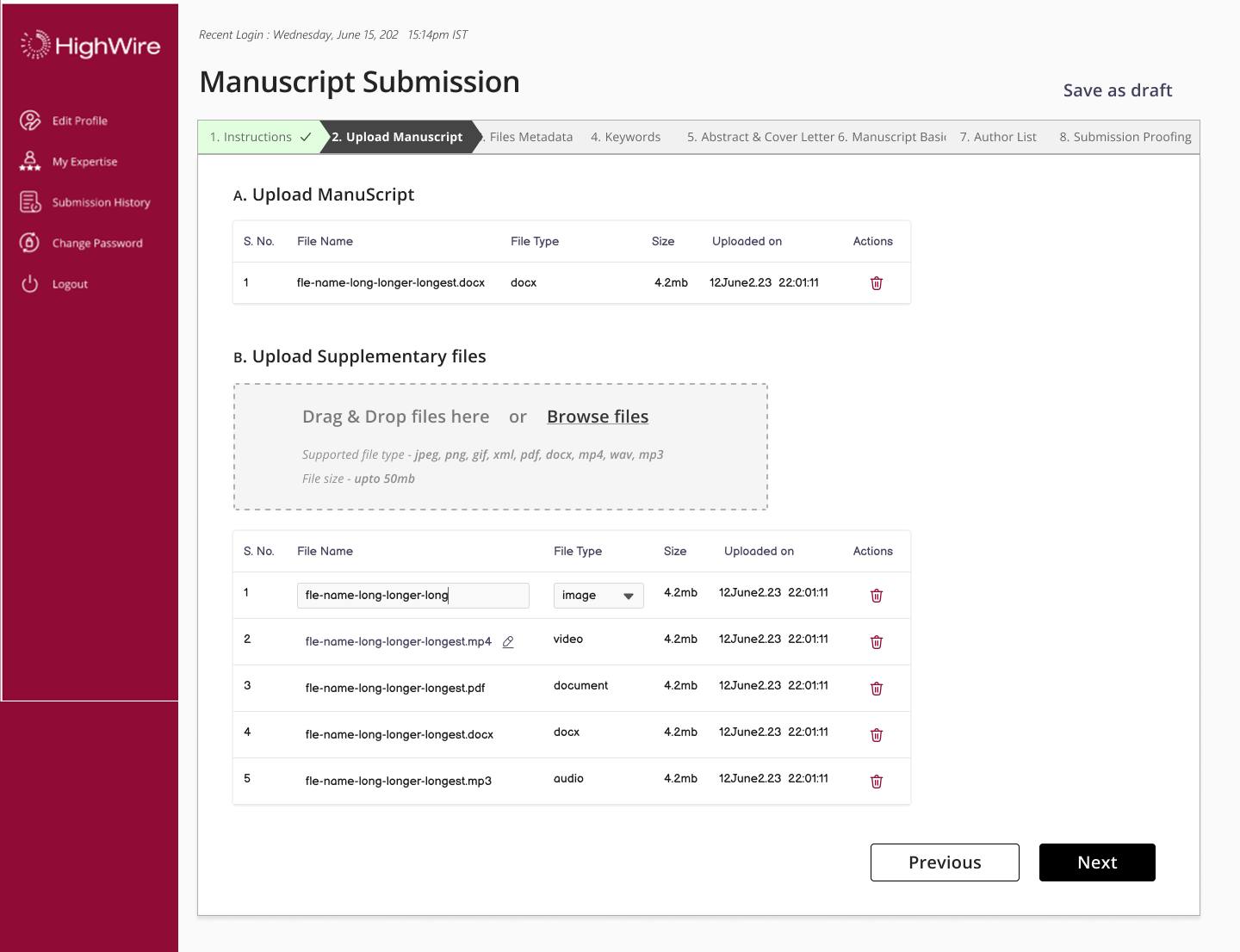
Based on these insights, we structured the entire submission journey into a clear, linear horizontal progression that prioritizes transparency. By breaking down complex manuscript data requirements into distinct, manageable milestones, this layout significantly reduces cognitive friction and provides authors with a continuous sense of momentum.
Design System & Storybook Documentation
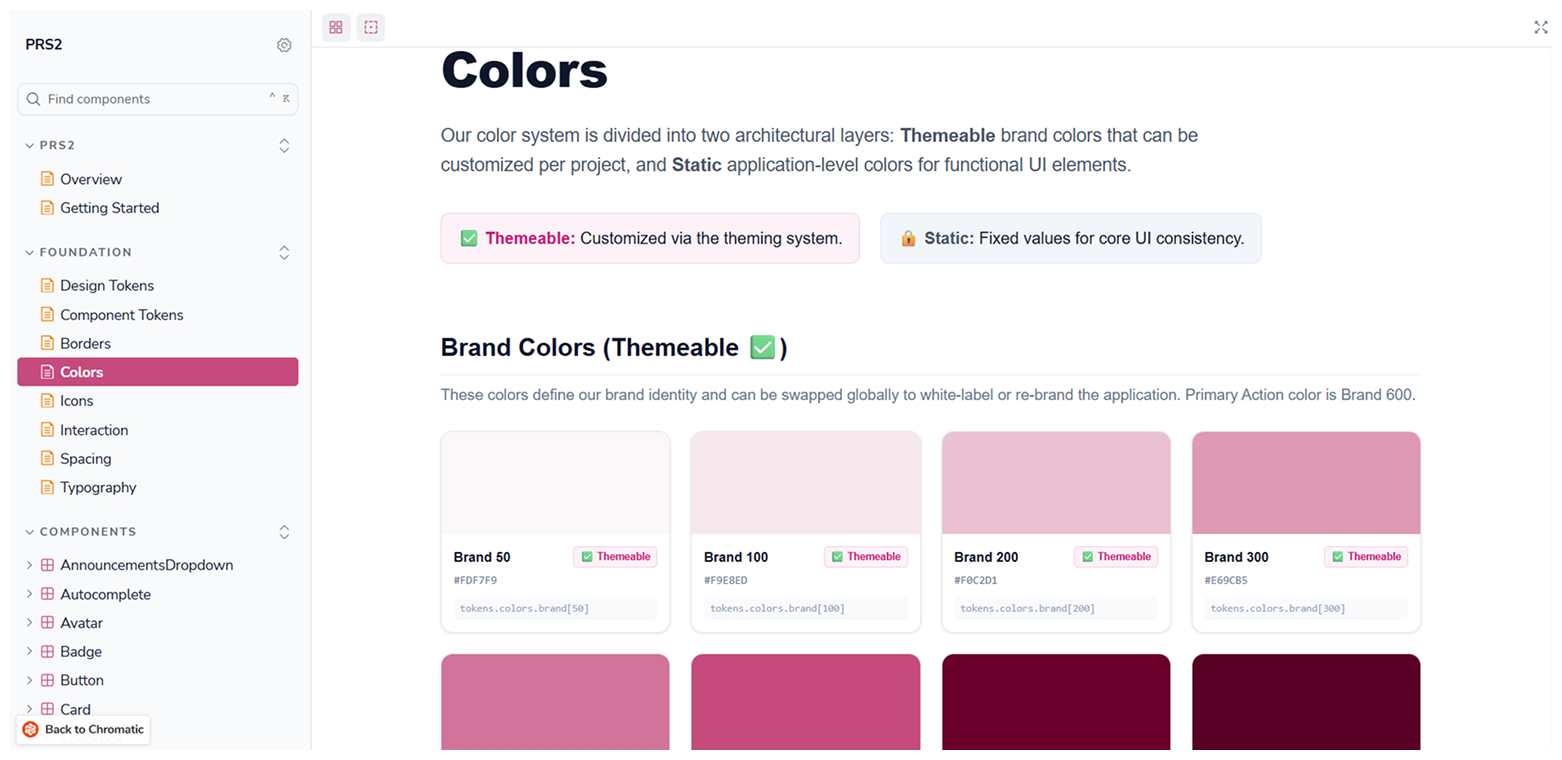
To maintain design consistency and speed up front-end execution, all foundation variables and components were built and documented in Storybook:
Storybook Repository: 6982ca9769567da277f71be0-dcelolxzql.chromatic.com/
Our color system is split into two layers:
- Themeable Layer: Customized brand tokens mapped per client/journal (e.g., Brand 50: `#FDF7F8`, Brand 100: `#FBE8ED`, Brand 200: `#F6C2CE`) to facilitate white-label deployments.
- Static Layer: Fixed variables governing utility UI blocks like boundaries, error alerts, and statuses.
Editor: Stakeholder Testing & Validation
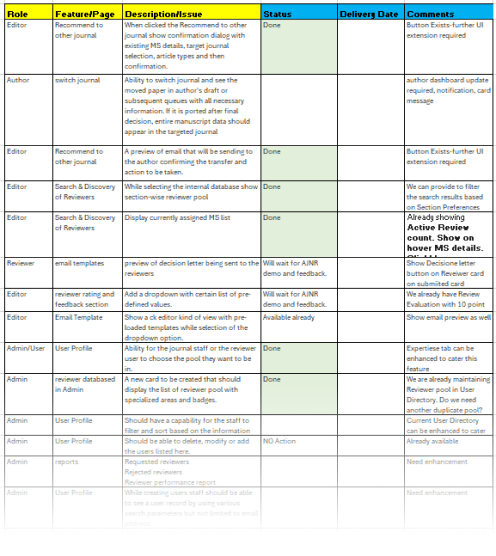
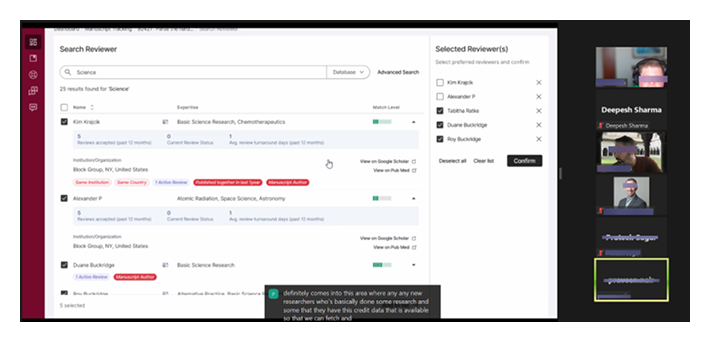
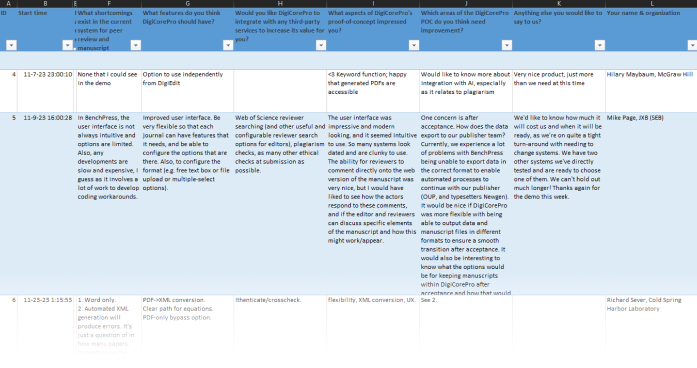
To align requirements, we conducted 11 prototype demonstrations with a focus group consisting of Senior Editors and Editors-in-Chief representing key publishing portfolios. Their feedback was mapped to a prioritized matrix, tracking roles, features, delivery timelines, and design decisions. This was supplemented by post-demo surveys to capture features that were missed in active group sessions.
Unmoderated Testing Results: Phase 1
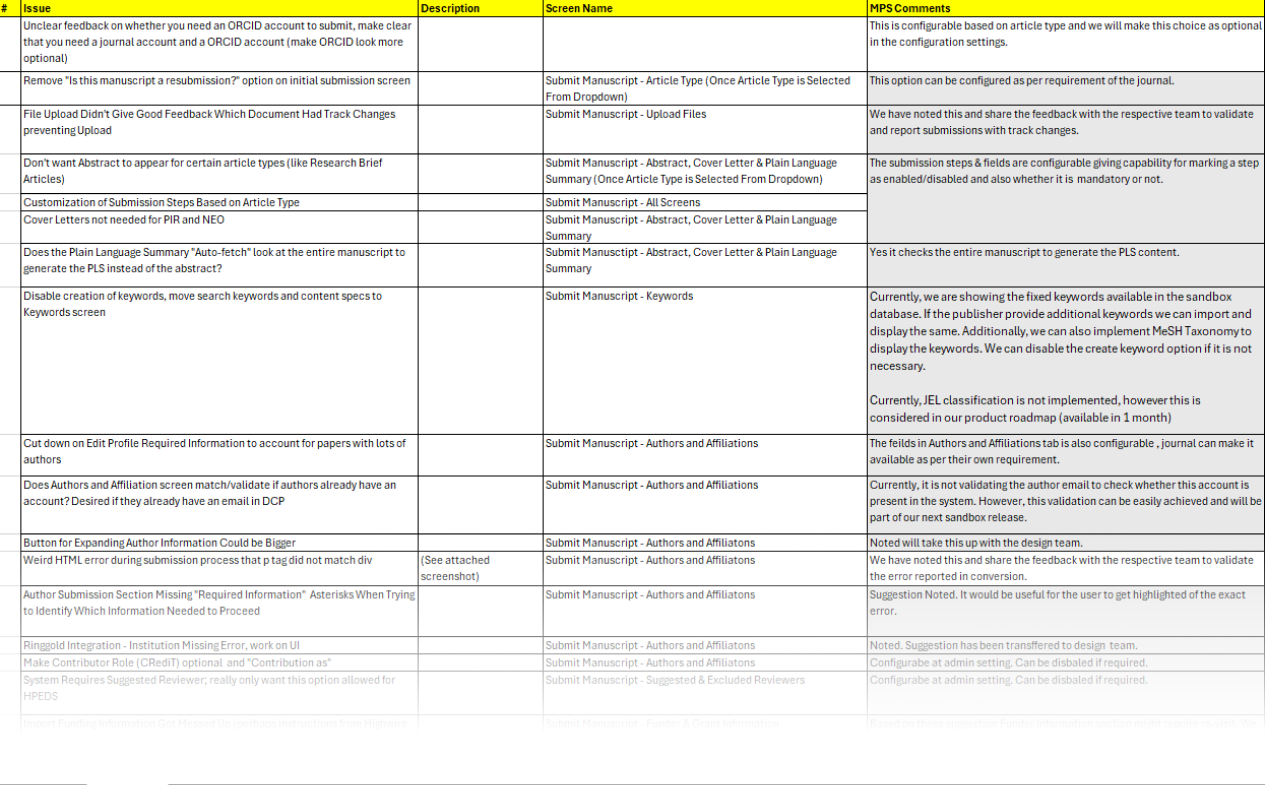
To ensure the platform met customer needs at a granular level, prototypes were distributed to 3 existing and 6 potential customers for unmoderated testing with their actual user bases. This rigorous validation phase yielded 312 specific feedback points.
The most frequently reported issues centered around navigation friction, missing input fields, and ambiguous labeling:
Outcome & Impact
The deployment of the Submission & Peer Review System v1.0 generated measurable improvements in core publication metrics, optimizing workflows for authors, editors, and reviewers alike:
Autofill feature has reduced the submission time by 50%. Manual submission time for a research article was 25-45 mins depending upon the information requirement from the Journals.
2 journals onboarded with existing 55k users. Supporting ~4K monthly active users, authors contributing the majority of activity.
Editors can now manage workflows independently without needing any development request. Earlier TAT was ~3 weeks for minor workflow updates.
Reviewers can now annotate the manuscripts online and provide feedbacks instantly. Earlier, reviewers used to download manuscripts, annotate through offline tools and upload with feedbacks for review submissions.
Key Learnings
- Workflows are highly custom: Publishing systems vary heavily. Interfaces must dynamically align with specific journal templates.
- Editorial adoption is tough: Editors require early active involvement in design. Matching current mental models was critical to drive conversion.
- Reviewer matchmaking is key: Flagging conflicts of interest directly inside search layouts dramatically cut administrative errors.
Roadmap: Coming Up Next
- Help BotA chatbot to help users at any point of time, whether it's about knowing journal guidelines, application tutorials, support, etc.
- Onboarding Tour (under development)Added onboarding tour for new users to help them familiarize with the application quickly.
- Integrity CheckIt will help editors identify AI-generated content, plagiarism, "paper mills" and perform many checks at once on a single click. This is aimed to reduce the time spent on desk assessment and avoid any low-quality paper acceptance.
- + Many improvements